Showing posts with label Environment. Show all posts

Saturday, 1 March 2014

I sat upon the back steps looking out out clothesline and the apple trees as I ate my morning muesli.


Crested Pigeons


Friday, 6 December 2013

MADAGASCAR: WHAT IS HAPPENING?

?
Research has conformed that Ringtail lemurs living amongst limestone spires sleep in caves.

From the limited information I have tracked down, the Election still seems to be undecieded, I will try and find out more.

Saturday, 2 November 2013

LEARNING ABOUT TIMBER AND TREES

RED OAK

Everywhere I look these days I see "Red oak" mentioned. The large number of U.S.Asian blogs and pages I look at and of course "The Woodrights Shop" may go some way to explain this, but I have recently found this timber at the masters warehouse store near Canberra airport.
 Being  me I wondered what it was, where it came from, how useful it is to me and of course is it being produced sustainably?

Here is what I have found out:Quercus rubra at Kew Gardens

Red Oak
 Quercus Rubra  Family FAGACEAE
American Red Oak sapwood is white to light brown and heartwood is pink to red-brown. It is becoming increasingly popular for furniture, flooring and joinery around the world.
Red Oak
    Scientific name: Quercus rubra L.
    Common name(s): red oak, northern red oak
    Synonym(s): Quercus borealis F.Michx.
    Conservation status: Least Concern (LC) according to IUCN Red List criteria.
    Habitat: Valley floors to mid-slopes of hills and mountains Quercus rubra is native to south-eastern Canada and north-central and eastern USA.
  
Red oak is hard timber from a rapidly growing tree, which naturally make it a good plantation tree.   It is straight grained with with large open pores. Apparently the grain is so open   that smoke can be blown all the way through a flat-sawn board.
 

American Red Oak sapwood is white to light brown and heartwood is pink to red-brown. It is becoming increasingly popular for furniture, flooring and joinery around the world.
Red Oak


How does it compare to Quercus robur?  (European/English oak)

  Density:
  • Q. rubra :770 kg/m³
  • Q. robur: 670-720 kg/m³ 
 Shrinkage:  
  •  Q. rubra:  Radial: 4.0%, Tangential: 8.6%, Volumetric: 13.7%, T/R Ratio: 2.2
  • Q. robur: Shrinkage:Radial: 4.7%, Tangential: 8.4%, Volumetric: 13.0%, T/R Ratio: 1.8
Average dry weight:

  •  Q. rubra:  44 lbs/ft3 (700 kg/m3)
  • Q. robur: 42 lbs/ft3 (675 kg/m3)  
  It would appear from these statistics that the two timbers are very similar in all but colour.

References:

Friday, 20 September 2013

Creatures of the night:

Night Stalk: spotlighting trip 1

Went for a walk to Gunghalin hill nature reserve, which is just behind Crace and spent over an hour spotlighting.

Tonight we saw..... 3 micro-bats and heard many, 14 grey kangaroos, 3 Brushtail possums, one on it's own and a mother with a baby on her back, 1 cockatoo, three wood duck and 3 foxes. Definitely going out spotlighting for Nightstalk again!
 Another cool thing from last nights "Nighstalk" was playing recorded animal sounds and listening for a response. We had minimal luck... except for a moment in the forest of eyes where we played a recorded fox call. I don't know what the recorded fox was saying, but it made the local foxes a bit excited!
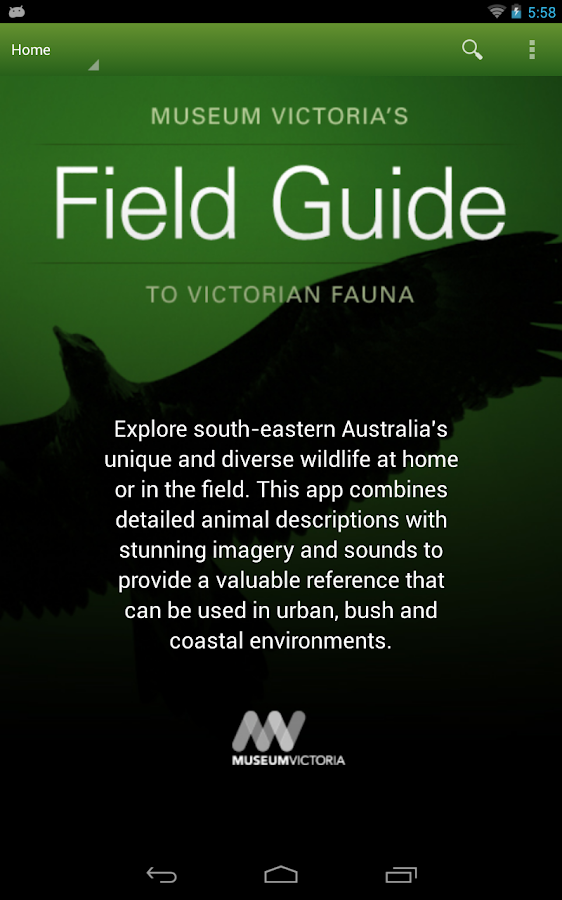
We tried the same technique with a Tawny Frogmouth call and a Southern Boobook call but had no luck.   The Museum of Victoria has produced an iphone App called the "Field Guide to Victorian Fauna". I'm not in Victoria but many of the species are the same.
 Link to: Field guide to Victorian Fauna

Wednesday, 4 September 2013

Madagascar


Lemurs are among the most loved animals in the world, naturally we see keeping them and their habitat as extremely important.  But we go to bed at night with full bellies and if we dream of Madagascar the chances are our minds don't wander far beyond lemurs with their delightful behavior and cute looks.

But what about the people who live there? They are an amazing mix of settlers from the Malay Archipelago, Africa and India, who began arriving in Madagascar around 200 ce.
Madagascar is home to 20,713,819.0 people, with 69% living in rural Areas (World Bank). 
     4 years ago the current regime came to power and political turmoil ensued. In this period the country has lost much of it's foreign AID as well as commercial investment. Food shortages were already on their way when a new problem arose. Locusts. With up to 1/2 of the island affected by locusts food resources are decreasing and many Madagascans are surviving by exploiting the islands natural resources. 


 This means Lemur Habitat is being lost to illegal logging, both for export and local use. It also means that Lemur is now on the menu.


In these circumstances it will take a great deal of work to safe guard both the people and wildlife of Madagascar.What is needed to create this is political stability and  the reinstatement of government authority throughout the country. The recently announced Presidential Election on the 25th of October gives me hope that we may not be to late to save an amazing island and it's inhabitants.
 

Saturday, 24 August 2013

A slightly rambling post mainly about the "Green Revolution"


This part of me began one Sunday in church. There was no Sunday school for the kids during the sermon so we sat through the whole thing. Usually I concentrated on making the votive candles blur into stars by squinting. But on this day  my ears perked up when farms were mentioned.   I don't remember the exact context of the sermon, but the image of a poor farmer using poisons so his crop would flourish then having to eat them, despite the risks didn't just stick in my mind, it influenced my beliefs profoundly.
This was in the early 1980's and the green revolution was in full swing, proclaiming an imminent end to world hunger.

  Why was there a perceived need for a new way of doing things?
In the Punjab regions of India and Pakistan increases in yield were historically associated with increases in the amount of land under cultivation (Murgai et al 2001).. Naturally this pattern of continued growth is unsustainable and undesirable. In order to increase yields there are 3 other areas which can be turned to, irrigation,  new plant varieties and irrigation projects.

   And that is just what was done in these regions, irrigation schemes were established, fertilisers were applied and  "improved" or higher yielding varieties of crops were planted.
The result unsurprisingly was an increase in the yield from these regions. 
  But that is not the end of the story at all.
 The situation can be summarised  as follows.....
  In 2001 In the Indian sate of Haryana
  • 82% of the geographic area already under cultivation 
  •  Fertiliser requirements have increased
  • 60% of the geographical area faces soil degradation
  •  Since 1985, the water table has risen more than 1m annually, and patches of salinity have started to appear at the farm level.
(Singh 2000).
 To increase yields most of the land that could be farmed was being farmed,  fertility, soil structure and water quality have all being negatively impacted and in order to keep yields high or to increase them further investment has being required. The marginal return has diminished reducing the resilience of the system.
 And that is when you start needing to run to stay in the same spot, constantly coming up with new farming methods, plant varieties and finding ways of reducing costs.
What is more the situation must be reversed if yields are not to decrease and that, takes money.

Australia has had similar experience with salinity and water quality in the wheat belts and in cropping areas such as the Lockyer valley.  Salinity resulting from irrigation practises in Australia affects about 16% of the agricultural area, and up tot 67% of the agricultural area has a potential for ‘transient salinity’ which involves temporary build ups of salts within soils.(Rengasamy 2006)
  Essentially our current methods of farming are not sustainable and ultimately reduce the ability of agricultural land to produce sufficient food to feed the world.

  Currently I'm reading up on this and sometime soon will write up a post about this. Be warned this post is also likely to be edited a lot.

References
  • Murgai R, Ali M,Byerlee   2001 Productivity Growth and sustainability in post Green Revolution Agriculture: The case of the Indian and Pakistani Punjabs, The world Bank research observer vol 16  no 2  pp199-218.
  • Singh R B 2000 Environmental consequences of agricultural development: a case study from the Green Revolution state of Haryana, India,Agriculture, Ecosystems and Environment 82 (2000) 97–103
  •  Rengasamy P 2006 World salinization with emphasis on Australia Journal of Experimental Botany Volume 57, Issue 5 Pp. 1017-1023.


Sunday, 11 August 2013


Nightstalk..... 

  This is something I am doing to increase peoples awareness of wildlife, in my case in Canberra. Of course I'm just offering my brains and previous experience, the program itself is run by Perth Zoo. I also realize that they rely on sponsorship from a Mining Company, I still think that the potential benefits may be great though.


For more info and to find out how to organize a Night-stalk to invite me along to go to ......

http://www.perthzoo.wa.gov.au/act/night-stalk/

I think this is a really important opportunity, Let me know if you are interested. (I am not affiliated with this program or institution)